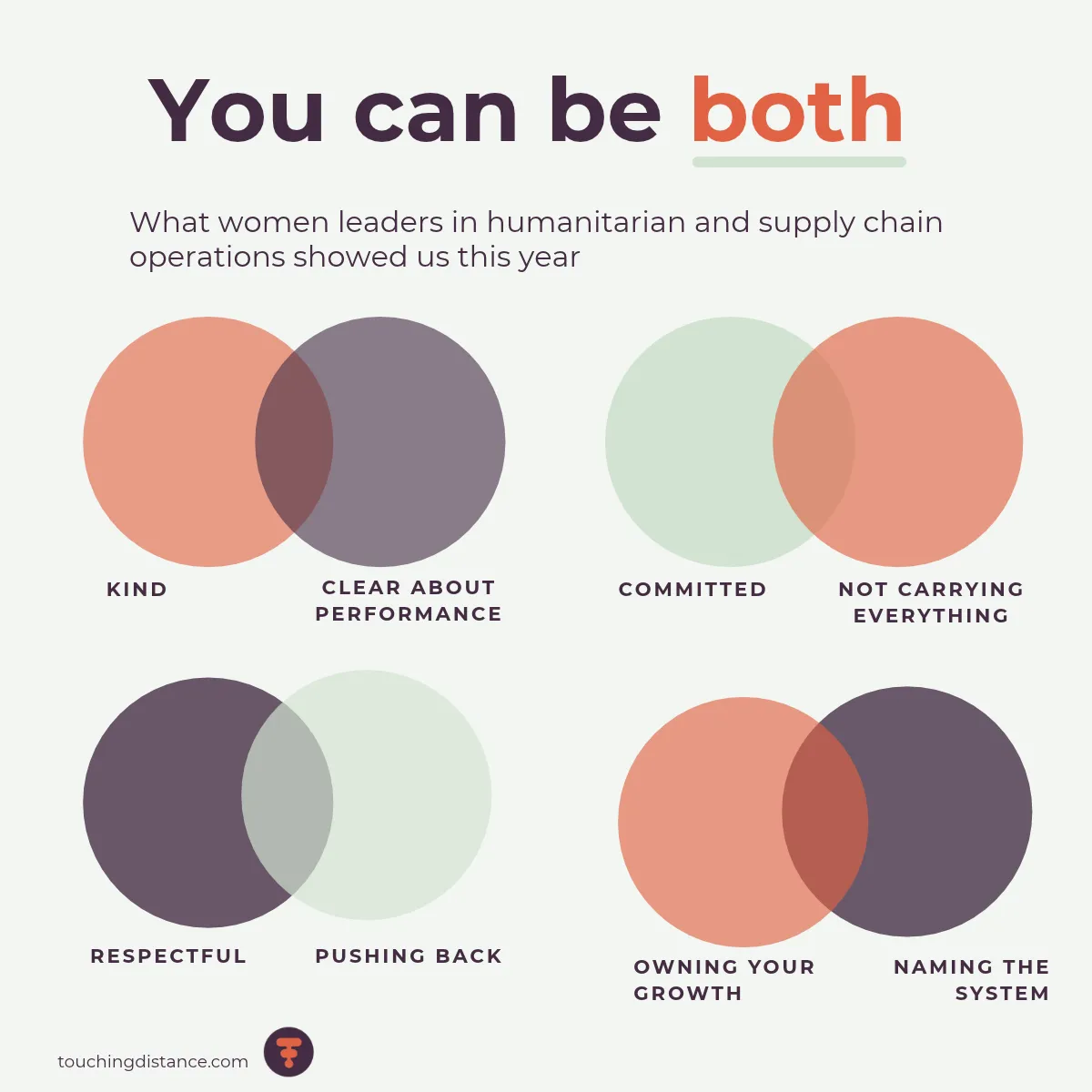
The "or" you never agreed to
Kind or respected. Ambitious or available. Strong or supported.
Most of us pick up a few of these trade-offs along the way. Nobody hands them to us directly. We learn them by watching who gets promoted, who gets called "difficult", and who gets thanked for staying late.
I've been thinking about them a lot since Charlotte Balfour-Poole and I wrapped up Change by Design, a coaching programme for women leaders in humanitarian and supply chain operations. The patterns I noticed there also come up in many of my coaching conversations with leaders more broadly, so this week I want to share four of them with you, along with something small you can try for each.
Kind and clear
Many of us were taught that kindness means keeping things comfortable, so hard conversations get softened until the message disappears, or put off until frustration does the talking. Being nice tends to protect the moment, whereas kindness looks after the person and the relationship over time, and sometimes that means saying the hard thing clearly and early.
Give this a try: before you give your next piece of feedback, ask when they'd like to hear it. "I have some feedback I'd like to share with you. Is it something you'd be open to hearing now, tomorrow or at another time?"
Committed and not carrying everything
It's easy to measure commitment by weight: how much you hold, how late you stay, how many things would fall apart without you. What I've come to believe is that commitment doesn't shrink when you stop carrying everything. It often becomes more focused, and the people around you get more room to step up.
Try this: this week, notice one thing you're holding that someone else could own, and hand it over with enough context for them to run with it.
Respectful and pushing back
In many of the places we work, respect for hierarchy runs deep, and often for good reason. Respect and agreement aren't the same thing, though. You can raise a concern with someone senior, disagree and hold your ground, and still honour the relationship.
Try this: before your next difficult meeting, prepare one sentence that names what you care about and what worries you. For example, "I want this to work, and I'm concerned about the timeline. Can we look at it together?"
Owning your growth and naming the system
When we hit a barrier at work, the instinct is often to turn inward and ask what we're doing wrong. That reflection has value. When people from different organisations and countries compare notes, though, it often becomes clear that some of what they've been carrying comes from the systems they work in, rather than from a personal failing. Naming that frees up energy for what you can influence.
Try this: next time you catch yourself asking "what am I doing wrong?", add a second question: "what about this situation would make it hard for anyone?"
Reflection invitation
Finding your own "both"
These four are the ones that stood out to me, but you'll have your own. A few questions to help you find them:
1. Which either/or did you pick up early in your career, and where did you learn it?
2. Where are you choosing one side right now because the other feels too risky?
3. What's one small way you could practice holding both this week?
If you lead a team, it could be worth turning these outward too. What does your culture reward? Who gets seen as committed? How does it land when someone pushes back? The answers often shape which either/ors the people around you feel they have to carry.
Share what you're mulling over in the comments! I'd love to know why "or" you've been carrying that might really be an "and".
With you,
Linda
